Instant Integration
Orbital connects your APIs, databases and streams on demand, without the glue code.
New tasks shouldn’t need new integrations.
Most applications and AI agents can only do what’s been wired up in advance. Every new requirement means another integration to build and maintain.
Orbital connects your systems once, then safely resolves and executes what’s needed at runtime.
Use what you already run
OpenAPI, Protobuf, Avro, Kafka, databases, S3 and more - connected from the schemas you already publish.
Adapt as APIs change
Orbital replans against updated schemas. Compatible API changes are handled automatically.
Ship an endpoint in minutes
Turn any data request into a REST endpoint, stream or scheduled batch job.
See everything you’re connected to
Every connected source is automatically catalogued, searchable and mapped - including its schema, operations and relationships.
Stop building the same integration twice.
A new screen needs customer data from three systems. A batch job needs the same data in a different shape. That shouldn’t mean building another integration.
Describe your sources and how their data relates once. Orbital uses that model to plan and run each request, so the next requirement builds on the work you’ve already done.
Traditional integration
- Build custom integrations and pipelines
- Maintain mappings, resolvers and client code
- Rework integrations as systems change
- Operate the middleware you create
With Orbital
- Describe your sources and how their data relates
- Describe the data or action you need
- Reuse that model for new requests
- Publish updated schemas as your APIs evolve
Describe what you need
Ask for the data or action you need - in TaxiQL or plain language. Orbital works out the integration.
Query with TaxiQL
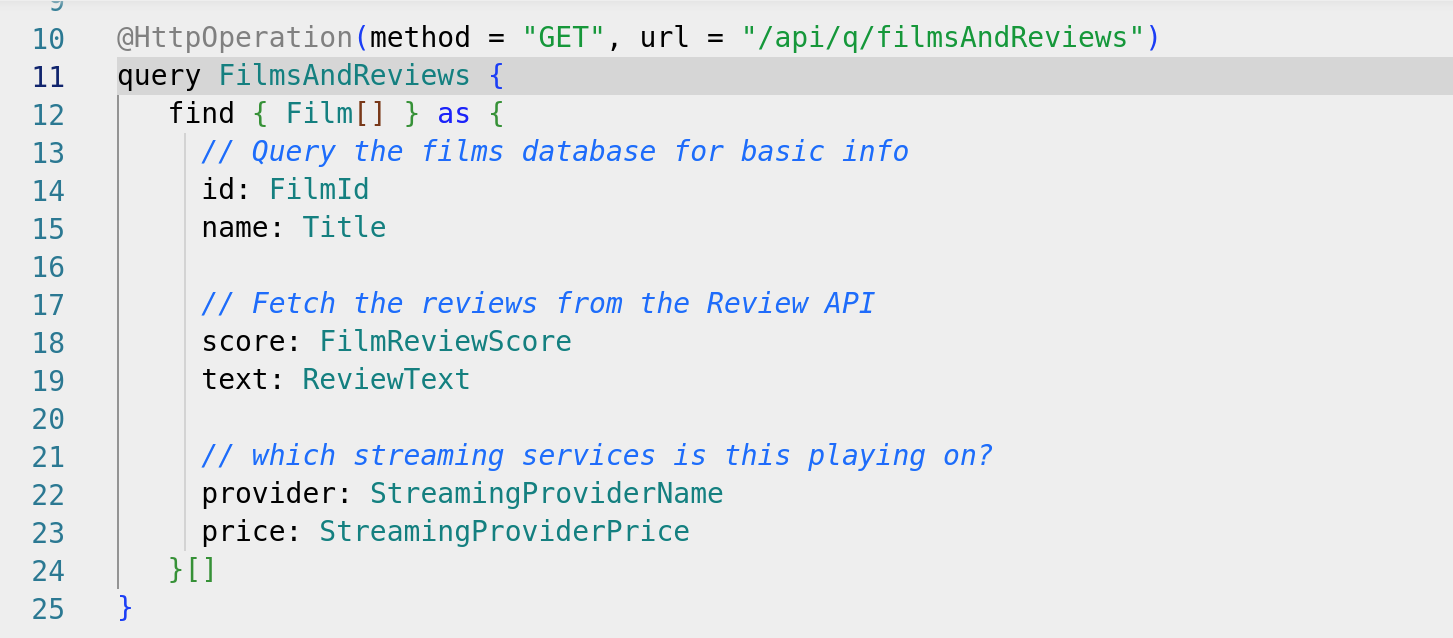
Describe the data or action you need with TaxiQL. Add a field from another connected source and Orbital works out the extra calls.
Queries are strongly typed against the semantics in your schemas, with validation and developer tooling as you write.
Chat to query
Ask for what you need in plain language. Orbital's query assistant uses the semantics in your schemas to turn the request into TaxiQL.
Review or refine the query, then run it just like any other TaxiQL query.
See what's happening
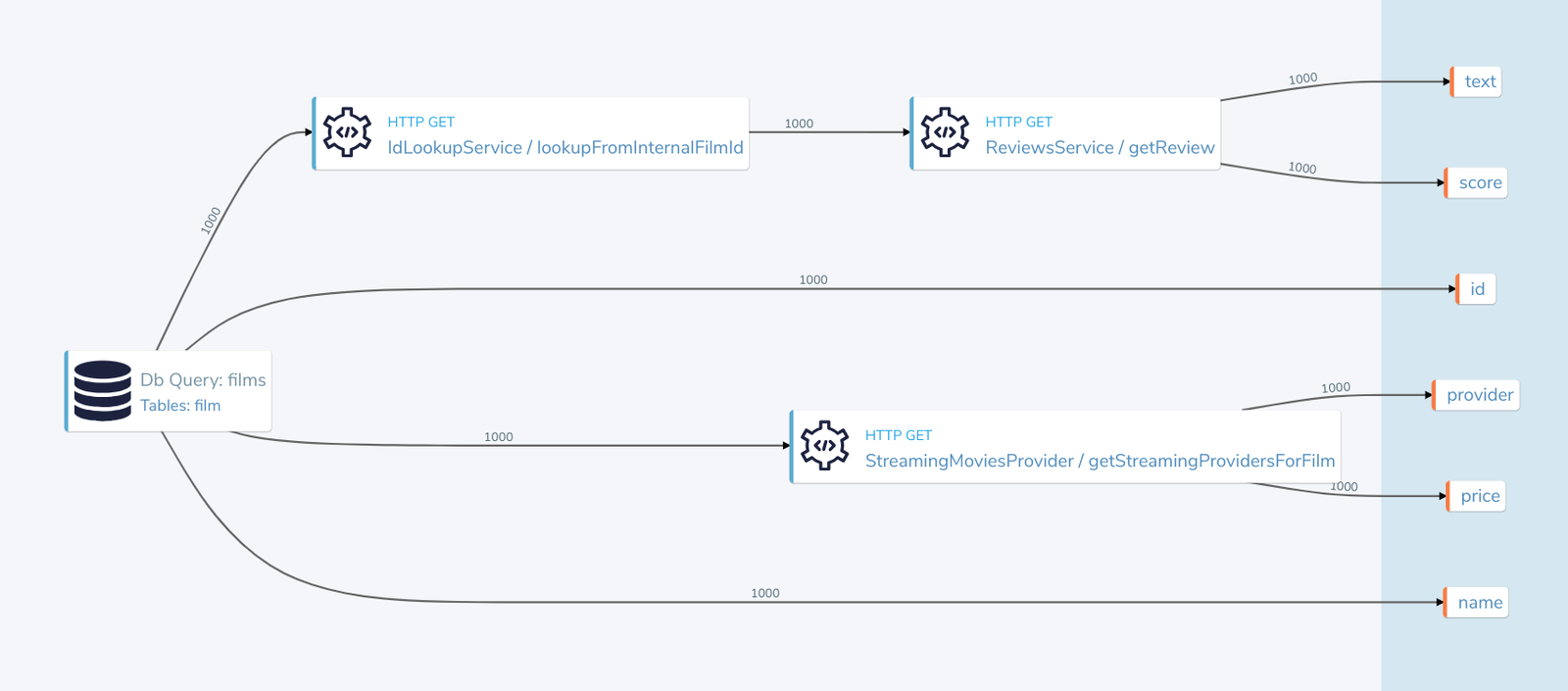
Inspect every integration Orbital runs.
See which services were called, how the data moved, and where each field in the result came from.
End-to-end type safety
Learn more about Taxi, our open source schema languageTaxi and TaxiQL provide end-to-end type safety across all your data sources, APIs and Kafka topics.
VS Code extension
Install the Taxi VS Code extensionAuto-completion, linting, formatting, and inline documentation helps developers build and ship directly from within VS Code.
Not just APIs
Orbital works across APIs, databases, files and streams. Use the same semantic model for live queries, batch pipelines and event-driven integration.
Query across APIs, databases, S3 buckets and more, all in a single request. Orbital works out where each field comes from and calls the systems it needs.
Define batch jobs as TaxiQL queries. Read from S3, databases or uploaded files, enrich from your APIs, then write the result out.
Read from Kafka, enrich each event with data from APIs or databases, then publish it to another topic, WebSocket or secured stream.
// Send a query for data to Orbital,// and it builds the integration on demand,// using metadata embedded in your API specsfind { Movies(ReleaseYear > 2018)[] }as { // Consumers define the schema they want. // Orbital works out where to fetch data from title : MovieTitle // .. read from a db review : ReviewScore // .. call a REST API to find this awards : AwardTitle[] // ... and a gRPC service to find this.}// Define simple schemas for CSV files, then// read from S3, databases, or upload directly to Orbital@Csvclosed model InventoryReport { name: ProductName category: Category stock: StockLevel price: Price}// A stream of data over Kafka@KafkaServiceservice FilmReviewUpdates { stream reviews: Stream<NewReviewSubmittedEvent>}
// Stream data from Kafka, and enrich it// from APIs:stream { NewReviewSubmittedEvent } as { id: FilmId // From the event title : Title // Looked up from a DB reviews: Review[] // Fetched from an API call}[]
Data Semantics unlocks your company’s true data value, and Orbital makes it effortless.
Using Taxi & Orbital for our re-platforming project, we cut time to market from months to days and reduced operational resources by two-thirds.
If you’re not using this solution yet, you’re falling behind.

We delivered a critical project in weeks, not months, using a single developer instead of a team.
Our run costs are also much lower, as we’re not running hundreds of integration microservices.
Orbital has become a key part of our strategic architecture for the bank.
Integrations
Works with the stack you already have.
Connect the APIs, databases, streams and files you already run.
Taxi adds shared semantics across them, so Orbital can query and orchestrate them together.
Frequently asked questions
Got another gnarly question? We’d love to hear it. Come and chat on Slack.
Your first integration by this afternoon
Start with an API or schema you already have. Add semantics, write a query, and Orbital builds the integration.